
Terry Towel Embroidery: Preparing Lettering Above the Pile
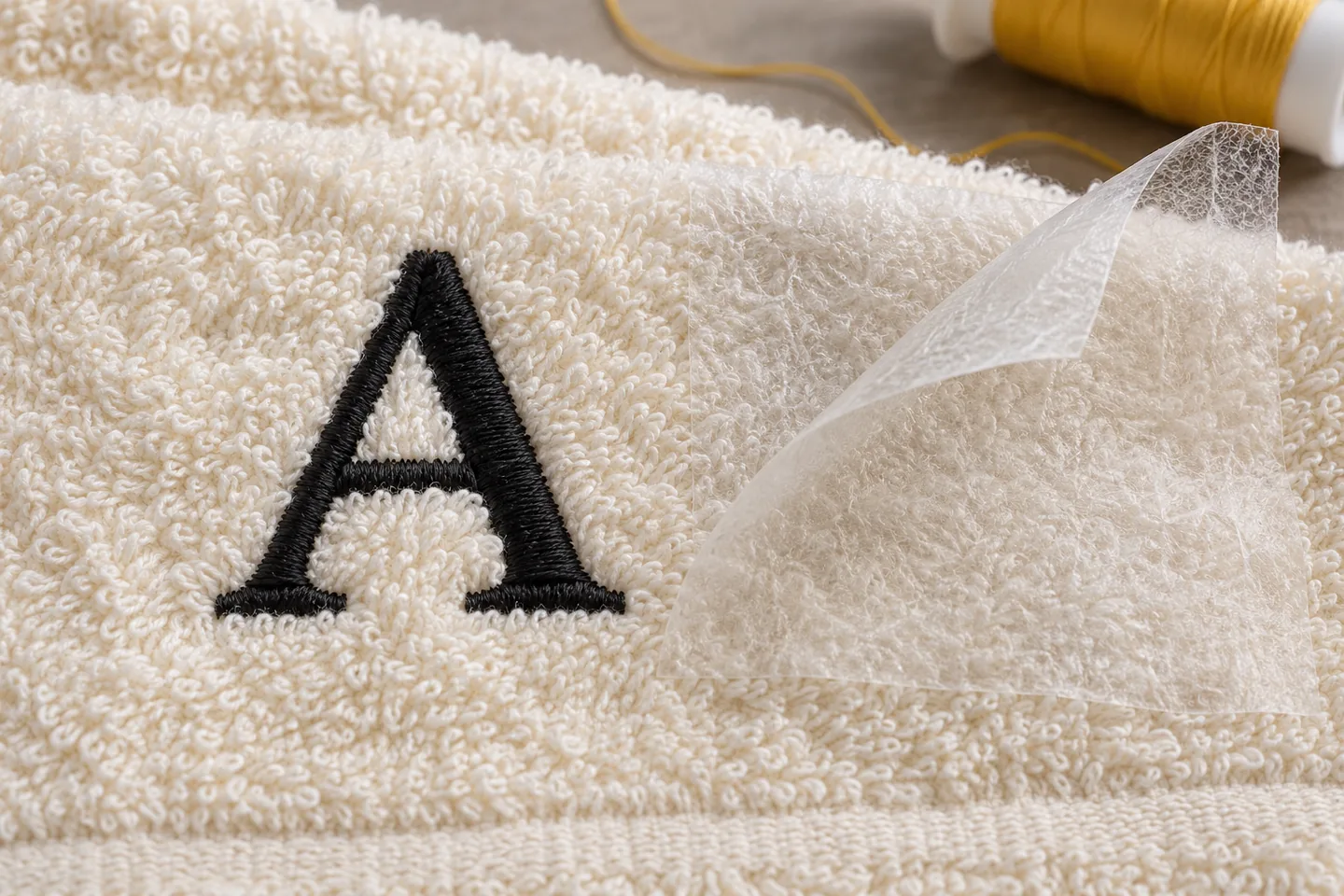
Terry towels are useful branded products for hospitality, spas, teams, and gifts, but their raised loops change how an embroidered logo reads. A line that is clear on flat woven fabric may appear partly buried in the pile. The practical question is not “Which universal stitch density works on towels?” It is “What does this artwork need on this towel, and what should the shop test before running the order?”
This guide covers the towel-specific preparation a buyer or decorator can share with a digitizer: the blank, pile, logo size, placement, and desired lettering. It also explains how topping and backing play different roles and what to inspect on a representative sample. It does not prescribe a machine setting for every towel or claim that DigitizingU performs a physical sew-out for each customer.
Identify the Towel Before Choosing a File
“Towel” can describe different constructions. A plush terry bath towel has lofty surface loops. A thinner hand towel can have a flatter decoration band. French terry is a knit with a different face and loop structure. The support that suits one may not suit another. Madeira USA's backing guide lists terry cloth and French terry separately and gives different backing examples. Treat those as supplier guidance to test with the real blank, not an automatic substitute for your shop's machine and material instructions.
Before requesting a file, record the towel manufacturer or model if known, the decoration area, fabric or pile type, towel color, intended finished logo size, and whether the reverse will be visible to the customer. Photograph the actual area with a ruler if a woven border, seam, or thick edge could limit hoop access. A digitizer can plan more usefully from those details than from a generic “put the logo on a towel” request.
If you have an existing file made for a polo, do not assume the same stitch plan will present the same way on terry. The artwork can be reused as a reference, while the towel's pile and support may call for a separate review of lettering, underlay, and density. The beginner's guide to embroidery digitizing explains what a stitch file controls; this page focuses on the towel surface.
Keep Lettering Legible Above the Pile
Fine lettering and narrow gaps are the first details to inspect. Loops can appear between stitches or cover a small opening in a letter. If the logo contains thin script, tiny punctuation, or several lines of text, decide which information is essential at the proposed finished size. A simplified tagline or larger lettering may read better than forcing every detail into a small towel placement.
There is no reliable single minimum letter height for every design, thread, towel, and machine. Ask the decorator to assess the artwork at the intended scale and test a sample. Check the open centers of letters, spaces between words, and the edges of strokes after the topping has been removed. If a customer insists on a very small mark, show them what was actually tested before approving the full batch.
Send the clearest source logo available, any approved lettering or color reference, and the target dimensions. If you only have a small screenshot, the logo preparation guide gives a broader artwork checklist. Avoid treating a digitally enlarged preview as proof that the stitched small letters will stay readable.
Topping and Backing Do Different Jobs
A water-soluble topping sits on top of a textured fabric during embroidery. Its purpose is to keep towel loops from pushing into the visible stitches while the design is sewn. Madeira USA describes this use for terry and other high-pile fabrics, and Brother's embroidery support guidance likewise recommends water-soluble stabilizer on the top surface of thick terry cloth towels. This is a reason to include topping in a sample plan, not a promise that topping alone will fix an unsuitable design.
Backing supports the fabric from behind while it is hooped and stitched. Its selection depends on the towel construction, design, and finishing requirements. Madeira's guide gives a soft tear-away example for terry cloth and a medium cut-away example for French terry; these are different fabrics. Confirm the product and machine instructions for your own setup, especially when the towel back must look a certain way or remain comfortable to use.
The removal method matters too. Follow the topping manufacturer's directions for the material used; water-soluble products can require water or steam for small remnants after larger pieces are removed. Test the cleanup on a spare towel or sample if color, finish, or customer care requirements make moisture or heat a concern. Do not scrape under tiny stitches or assume that a film left between letters will disappear without checking.
Run a Representative Towel Sample
A sound sample uses the same type of towel and decoration area planned for production, or records exactly how a substitute differs. Set up the hoop, backing, topping, thread and machine using the shop's normal approved procedures and the manufacturers' guidance. Label the file version and sample before sewing, so the result can be traced back to the tested setup.
Inspect the sample in stages:
- 1Before removing topping: note whether the stitch run completed cleanly and whether towel loops intruded into letters or fine outlines.
- 2After removing topping as directed: check lettering openings, edge definition, placement, fabric marks, and any remnants around tight details.
- 3After the relevant care test: if the order requires repeated laundering or a particular finish, agree on a care check with the customer and record what happened on the sample. Do not claim wash durability from an unwashed preview.
A problem may stem from artwork detail, stitch planning, hooping, backing, topping, thread, or the towel itself. Record the observed defect and test one change at a time rather than assuming the file is always responsible. For a general explanation of defects on other fabrics, see the common embroidery digitizing mistakes guide; this towel guide stays with pile and sample-readability decisions.
Copyable Towel-Logo Intake Record
Use this blank record when discussing a file or sample with your shop. Fill in real job details; the underscores are placeholders and do not imply a DigitizingU deliverable.
| Question | Job answer |
|---|---|
| Towel type, model and color | __________ |
| Pile or decoration-band description | __________ |
| Placement and available hoop area | __________ |
| Approved logo or source-art version | __________ |
| Target width, height and required lettering | __________ |
| Machine model and requested stitch-file format | __________ |
| Planned backing and topping for the shop's test | __________ |
| Thread or color reference | __________ |
| Sample file version and test date | __________ |
| Readability, pile and cleanup observations | __________ |
| Decision and next action | __________ |
If the logo must appear on several towel styles, record each blank separately. A size or support choice accepted on a smooth border may not transfer to a plush bath towel. Keep a photo of the actual sample with the file version and approved dimensions for repeat orders.
Frequently Asked Questions
Do all terry towels need water-soluble topping?
Topping is a common way to hold high pile below the stitches, and both Madeira USA and Brother discuss it for towels. The exact material and removal method should be chosen and tested for the towel, design and machine. A low-pile decoration band may behave differently from a plush looped area.
Is topping the same as backing?
No. Topping is placed on the visible textured surface; backing supports the fabric from behind. A successful sample can depend on both, plus a suitable stitch file and machine setup.
Can I use the logo's vector file directly in my embroidery machine?
A vector logo is artwork, not machine stitch instructions. It must be digitized and exported to a format compatible with the specific machine. Share the machine model and preferred format with the digitizer instead of assuming a file extension will work everywhere.
Why does small towel lettering disappear after stitching?
Pile can sit between or over narrow stitches, and the original lettering may be too fine at the requested size. Review a sample after topping removal. The right adjustment may involve artwork simplification, size, support or stitch planning; the sample and setup notes help determine which.
Send the Details That Matter
When you request a towel-logo digitizing quote, include the source art, towel type, intended dimensions and placement, required lettering, machine format, and any prior sample photo. The embroidery digitizing service is the relevant existing service page. Your production shop should test and approve the file on its chosen towel before a full run.
For material-specific guidance, consult the Madeira USA backing guide and the instructions for the particular topping, blank and machine used in your shop.
Need a File for Your Embroidery Machine?
Share your artwork, garment, finished size, and machine format so the team can review your digitizing request.